
August 27, 2026
A Strong Franchise Model Protects the Brand Without Squeezing the Operator
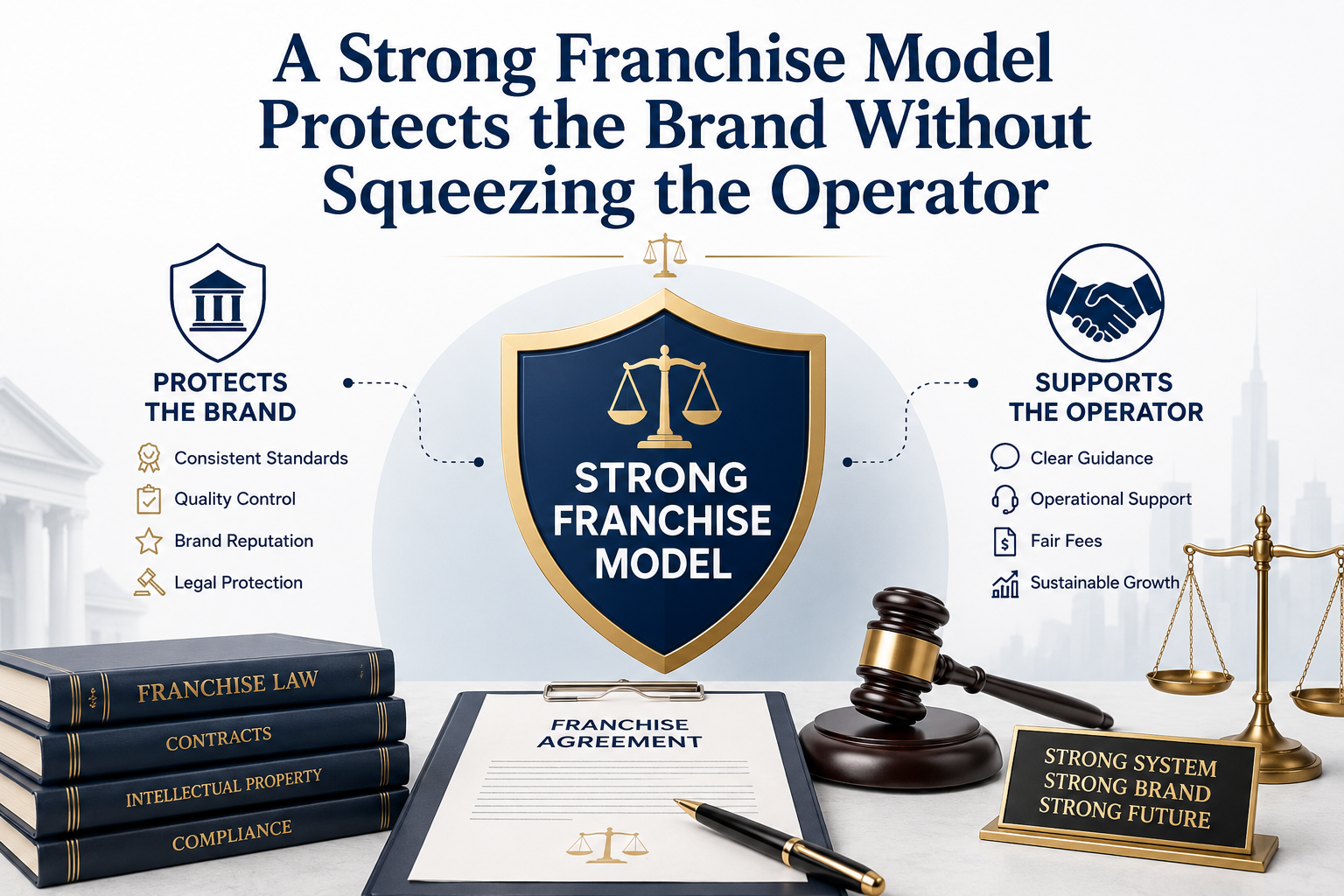
Franchising works because two independent businesses agree to operate within one commercial system. The franchisor brings the brand, operating model, intellectual property and standards. The franchisee invests capital, employs staff, manages the local business and carries much of the day-to-day operating risk.
That structure can scale quickly, but it can also create tension. The franchisor needs enough control to protect the system. The franchisee needs enough certainty to justify the investment. If either side is pushed too far, the network may grow in outlet numbers while becoming weaker commercially.
For businesses preparing to franchise, the better question is not simply how much protection the law gives a franchisee. It is whether the franchise model itself has been designed to create a workable balance from the beginning.
Protection Starts Before the Agreement Is Signed
Many franchise problems begin before operations start.
A prospective franchisee may be attracted by the brand or expansion opportunity, but the real commitment goes much further. Rent, fit-out, staffing, technology, stock, local marketing, working capital, royalties and future upgrade costs can all affect the economics of the unit.
A franchisor should therefore treat pre-contract information as part of commercial planning, not just paperwork. The operator should understand what the business is expected to cost, which payments are recurring, what support is included and which expenses may change during the term.
Clear information does not remove business risk. It makes that risk easier to assess before capital is committed.
Standardisation Should Have Clear Limits
Consistency is one of the strengths of franchising. Customers expect the same brand standards across locations, and the franchisor needs the ability to maintain them.
The problem is uncertainty about how far the franchisor can change the operating model after the franchisee has invested.
Technology requirements are a good example. A system may need a new point-of-sale platform, ordering system or customer-management tool. The change may make sense for the network, but it can still create an unexpected cost for franchisees.
The same issue arises with refurbishments, equipment replacements and store redesigns. A well-designed model should make clear which changes can be required, how major costs will be communicated and whether notice periods or investment thresholds are appropriate.
Termination Should Protect the System Without Becoming a Shortcut
Franchisors need termination rights. A serious breach involving brand misuse, fraud, repeated non-compliance or conduct that damages the network cannot always be left unresolved.
But not every breach has the same impact. A missed reporting deadline is not the same as deliberate misuse of intellectual property. A temporary operating problem is not necessarily the same as persistent failure to meet standards.
This is why cure periods and escalation procedures matter. Where a problem can reasonably be corrected, giving the franchisee a defined opportunity to do so can preserve an otherwise viable business. For serious breaches, the agreement can reserve stronger remedies.
The objective is not to make termination difficult. It is to make the process predictable enough that both sides understand what conduct puts the franchise at risk.
Be Clear About Where the Money Goes
Recurring payments receive close attention because they directly affect unit economics.
Royalties are usually easy to identify. Marketing contributions can be more sensitive because franchisees may pay into a central fund without controlling how it is spent.
A strong system should explain what the fund is intended to cover, how expenditure is managed and what level of reporting franchisees can expect. The franchisor still needs flexibility to run national or regional campaigns, but greater visibility can reduce disputes over how contributions are used.
The same principle applies to technology fees, training charges, supply arrangements and other recurring costs. The full cost of participation matters more than any single fee viewed in isolation.
Renewal and Exit Need Attention at the Start
A franchise term can run for years, yet renewal is often treated as a future issue.
By the end of the initial term, the franchisee may have built a local customer base, recruited an experienced team and invested further capital. The franchisor may meanwhile have changed its format, growth strategy or performance standards.
Renewal conditions should therefore be understood before the first term begins. The agreement can address performance requirements, refurbishment obligations, new agreement terms, outstanding breaches and any fees connected with renewal.
Exit deserves the same attention. The parties should know what happens to signage, stock, customer records, confidential information, digital accounts and other brand assets when the franchise ends.
Good Franchise Governance Is a Growth Tool
Franchisee protection is sometimes presented as a restriction on the franchisor. That is too narrow.
Reasonable protections can make a franchise proposition easier to evaluate and reduce disputes caused by unclear expectations. At the same time, the franchisor must retain enough authority to protect brand standards and respond when the network needs to change.
The strongest model is not one that gives complete control to one side. It is one that clearly separates the decisions the franchisor must control from the risks the franchisee is expected to carry.
That balance should be reflected in the commercial model, the franchise agreement and the way the network is managed in practice.
Build the Model Before You Scale It
Franchising is easier to expand when the commercial rules are understood before new operators enter the system. Fees, support, capital expenditure, technology, termination, renewal and reporting should work together as one model rather than being negotiated as separate issues.
For brands planning to franchise, this work is best done before the first agreement is signed. For established networks, it is worth reviewing whether the original structure still reflects the way the business now operates.
Kaden Boriss advises businesses on franchise agreements, commercial structuring, market entry and cross-border expansion. Speak with our team to assess the model before the next stage of growth.
FAQs
1. Why does franchisee protection matter in a franchise model?
Franchisee protection helps create clearer expectations around costs, support, termination, renewal and operational changes. A balanced structure can reduce disputes while still allowing the franchisor to protect the brand and operating standards.
2. Can a franchisor require franchisees to make operational changes?
Yes. A franchisor may require changes where the agreement allows it, but the scope, cost and implementation process should be clear. Major upgrades are easier to manage when franchisees understand how and when such costs may arise.
3. Should every breach lead to termination?
No. Some breaches may be capable of being corrected within a reasonable period, while serious issues such as fraud, brand misuse or repeated non-compliance may justify stronger action. The agreement should clearly distinguish between different types of breach.
4. What should franchisees understand about marketing funds?
Franchisees should understand how much they are required to contribute, what the fund is intended to cover and what reporting or information they can expect. Clear rules around marketing funds can reduce disagreements over how contributions are used.
5. Should renewal and exit be addressed before signing?
Yes. Renewal conditions, refurbishment requirements, outstanding breaches, fees and exit obligations should be clear from the beginning. This gives both parties a better understanding of what happens when the initial franchise term ends.
6. Can a franchise model protect the brand and still give the operator room to run the business?
Yes. A well-structured franchise model can preserve brand standards while leaving the franchisee responsible for running its independently owned business. The agreement should clearly define which decisions remain with the franchisor and which risks sit with the operator.
Published 27 August 2026