

August 12, 2026
UAE Electronic Invoicing: Why Businesses Must Rethink Contracts Before Mandatory Rollout
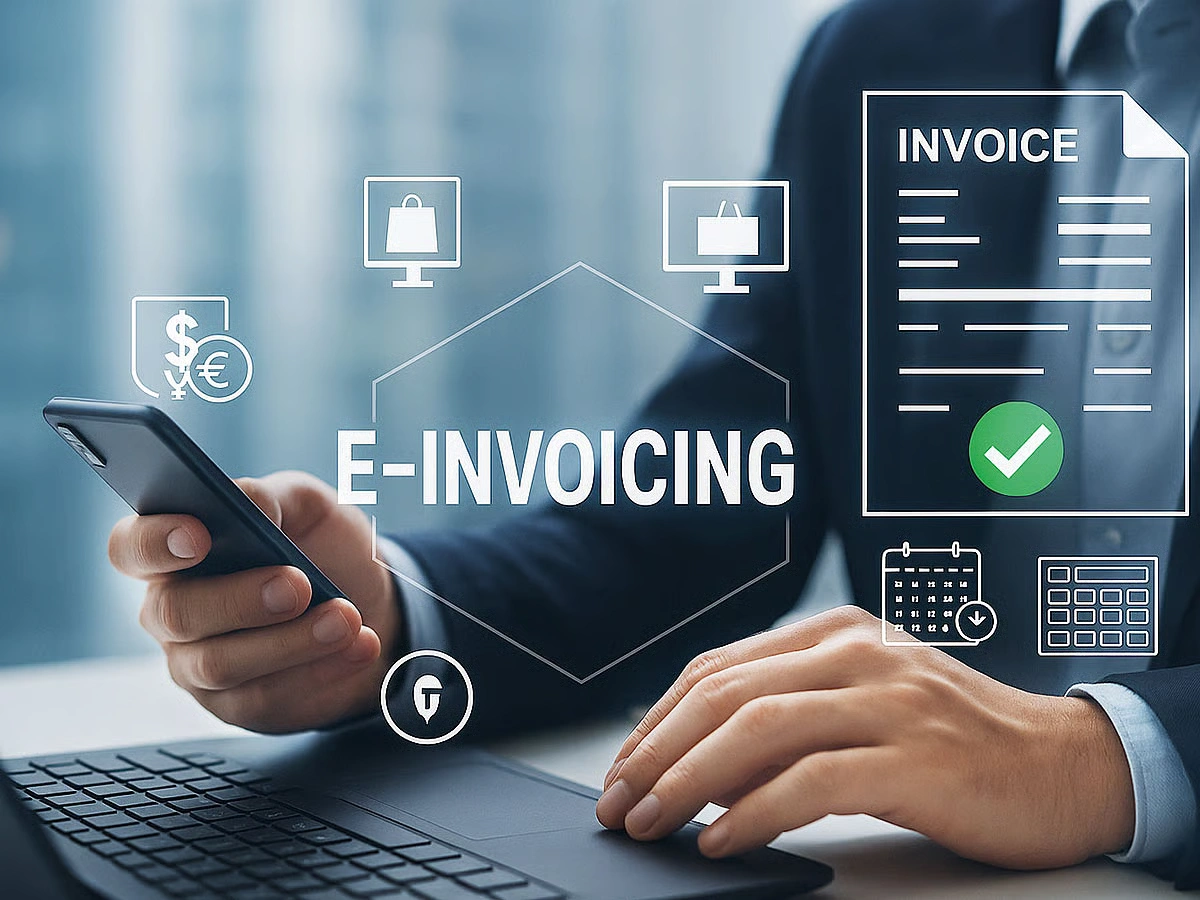
New E-invoicing rules could reshape payment terms, supplier obligations and dispute evidence under commercial contracts.
By Pearl Suri
For many UAE businesses, electronic invoicing may appear to be primarily a finance or technology exercise: select a provider, integrate the system and prepare for compliance. But the changes go well beyond accounting systems. E-invoicing affects when an invoice is legally issued, how it is transmitted, what constitutes delivery and what evidence is available if a payment dispute arises. These issues need to be reflected in commercial contracts.
The Ministry of Finance issued the UAE Electronic Invoicing Guidelines in February 2026 to support the national rollout, followed by an updated version in June 2026 covering areas including record storage, advance payments and retention amounts. Alongside Cabinet Decision No. 106 of 2025 and Ministerial Decisions No. 243 and 244 of 2025, the framework provides businesses and their legal advisers with greater clarity on the requirements.
Implementation will take place in stages. A pilot and voluntary phase began in July 2026, while mandatory implementation applies to businesses with revenue of Dh50 million or more from 1 January 2027. Smaller businesses will follow from July 2027, with government transactions scheduled to come under the system from October 2027.
The challenge is that many existing supply, service and construction contracts were drafted for traditional PDF invoices sent by email. Their payment and invoicing provisions may therefore need to be reconsidered.
From Documents to Structured Data
Under the new system, an invoice is structured electronic data rather than simply a document. It is transmitted through an Accredited Service Provider (ASP) over the Peppol network to the buyer's provider, while relevant tax data is transmitted to the Federal Tax Authority. For transactions within scope, a PDF alone will no longer constitute a valid tax invoice. Credit notes will follow the same electronic process.
This changes the traditional contractual understanding of when an invoice has been "received". Previously, a contract might treat delivery as occurring when the buyer's accounts department received an invoice by email and accepted it. Under e-invoicing, transmission takes place electronically between service providers, while tax reporting occurs regardless of whether the buyer agrees with the amount invoiced.
Rethinking Payment Deadlines
Many commercial contracts provide that the payment period begins when the buyer receives a valid invoice, often giving the buyer 30 days to approve it. Under the new system, such wording could create uncertainty.
The supplier remains responsible for issuing and transmitting the invoice within the applicable legal timeframe. For VAT-registered businesses, this is governed by the relevant VAT requirements, while in other cases the invoice must be issued within 14 days of the transaction. The buyer's internal approval procedures do not alter those obligations.
Contracts should therefore distinguish between the date on which an electronic invoice is validly issued and transmitted and the date on which payment becomes due. The payment trigger could be linked to confirmation of transmission by the supplier's provider, while the buyer should have a clearly defined period in which to challenge the invoice.
Contracts should also explain how the payment period operates where only part of an invoice is disputed.
Making Supplier Compliance Contractual
A supplier that is not properly connected to the e-invoicing system may be unable to issue compliant invoices. This creates a new contractual risk for businesses.
The onboarding process cannot simply be left to the supplier's service provider. The taxpayer must initiate the process through EmaraTax, while each entity requires its own tax identification number as its address on the network. This also applies to members of a tax group, which use their own identification numbers rather than that of the group representative.
Contracts should require suppliers to appoint an accredited provider, complete onboarding, confirm their implementation phase and maintain accurate identification and endpoint information. Suppliers should also be required to notify customers promptly of any provider change or transmission failure.
This is particularly important because an invoice sent to an outdated identifier may not generate an obvious failure notification. The invoice may simply fail to reach the intended recipient, leaving both parties to believe that payment is delayed for another reason.
Contracts should also address interim arrangements where a buyer has not yet gone live and establish when those arrangements will end. Appropriate contractual remedies could include withholding interest on non-compliant invoices, indemnification for input tax losses caused by supplier error and, in serious cases, termination rights.
Updating Record-retention Provisions
E-invoice data and related records must be retained for the periods prescribed by the tax procedures rules. The general retention period is five years after the relevant tax period, with longer periods applying in certain circumstances, including where a voluntary disclosure has been made.
The June 2026 guidance also clarified the practical approach to storing records "within the State". The key consideration is that records remain intact, accessible and readable for the relevant authority, rather than where the physical server is located.
Commercial contracts should reflect these statutory requirements rather than relying on generic record-retention clauses. Parties should also agree to cooperate with Federal Tax Authority queries, provide transmission evidence when required and avoid deleting relevant information before the applicable statutory period expires.
Strengthening Evidence in Payment Disputes
E-invoicing can provide stronger evidence when payment disputes arise, provided the parties have access to it. Service providers maintain transaction records containing unique identifiers, transmission status and routing information. These records can help establish whether an invoice was actually transmitted and delivered.
Contracts should therefore include appropriate evidence and access provisions. Each party should be able to obtain relevant transmission and delivery records from its provider and share them with the other party where necessary.
The contract should also clarify that a transmission confirmation constitutes evidence of delivery. Any subsequent adjustment should be processed through an electronic credit note, rather than relying on informal or provisional invoice arrangements.
Reviewing ERP and Provider Contracts
Businesses should also review their agreements with Enterprise Resource Planning (ERP) providers and other technology or service providers.
If an ERP system generates incorrect information or a service provider fails to transmit an invoice on time, the taxpayer may still remain responsible for meeting its legal obligations. Businesses should therefore consider negotiating service levels covering transmission and reporting, notification of failures, audit assistance, data return upon termination and an appropriate allocation of liability for penalties resulting from provider errors.
The transition to e-invoicing is not simply a technology project. It changes the legal and evidential framework surrounding invoicing and payment. Businesses should review their commercial contracts, supplier arrangements and technology agreements well before the mandatory compliance deadlines take effect.